How Vehicle Storage Works in Spring: RV, Boat & Trailer Parking Options Explained
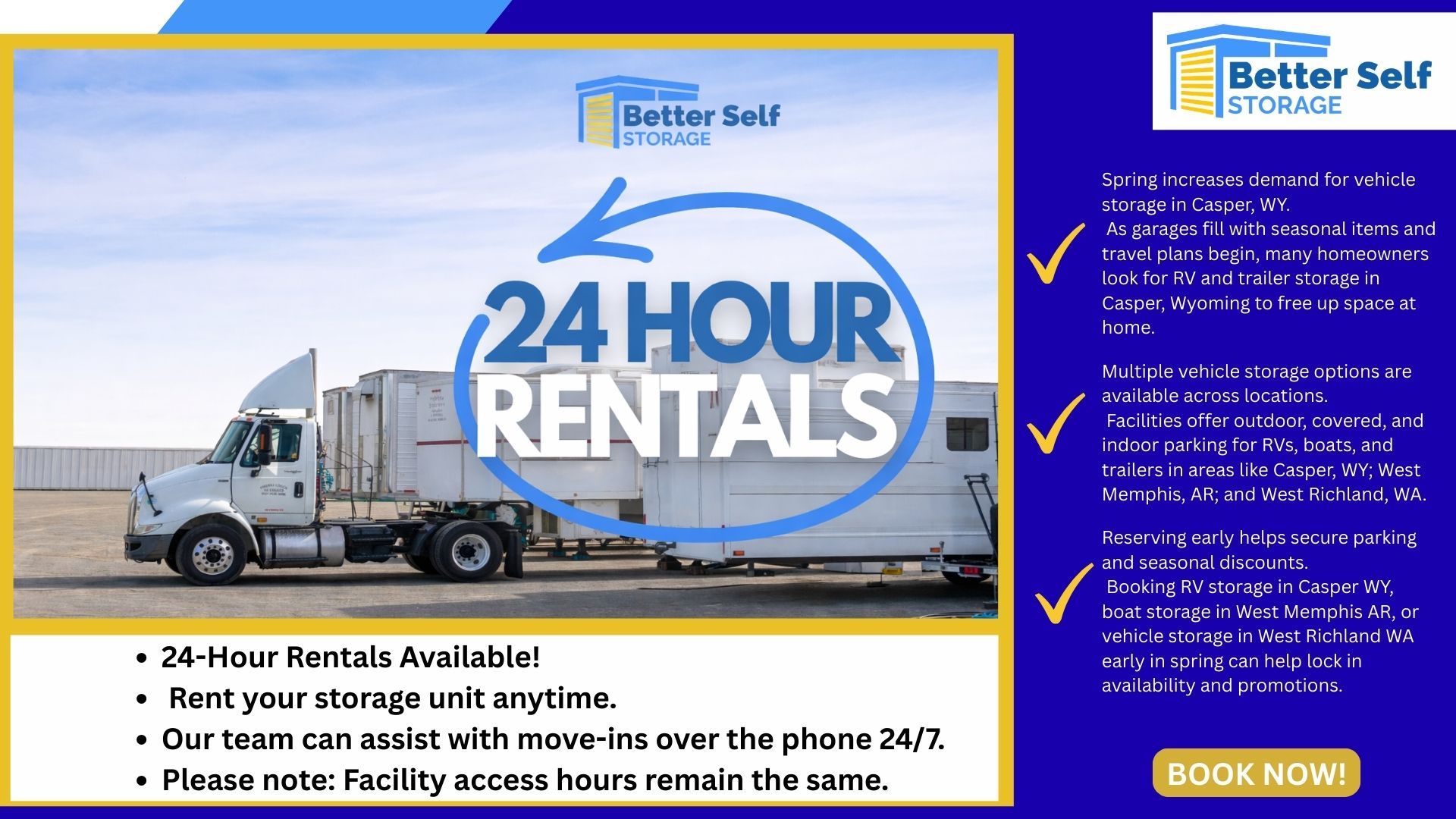
Blue 24 Hour Rentals ad with truck, large white text, bullet points, and a yellow Book Now button

A Spring Storage Story from Casper, Wyoming. Last spring, a homeowner in Casper, Wyoming faced a situation many people experience as the weather warms up. Their garage had become a temporary storage space for moving boxes and home improvement supplies, while their travel trailer was ready for summer trips. With two daily vehicles already parked in the driveway, there simply wasn’t room for everything.


Instead of leaving the trailer parked on the street, they reserved a 10×30 outdoor RV parking space at Better Self Storage. The process took only a few minutes online. Once the trailer was parked at the facility, their driveway was clear again and the garage could be used for organizing and spring projects.


This type of situation happens often as winter ends. Homeowners begin clearing space, preparing for travel season, or starting renovation projects. During this time, many people begin searching for solutions like RV storage in Casper WY, boat storage in West Memphis AR, or trailer parking in Topeka KS. Spring is when vehicle storage becomes less of a question and more of a practical solution.


Better Self Storage, customers can complete rentals 24 hours a day and receive assistance over the phone for move-ins, which can be especially helpful during busy moving weeks. Facility gate access hours remain the same for security and property access, but reserving a parking space can usually be done anytime.


This guide explains how vehicle storage works in spring, the types of parking available, and how seasonal promotions can help reduce storage costs across several locations.


What Vehicle Storage Means in Spring


Vehicle storage during spring simply means renting a designated parking space at a storage facility where larger vehicles can be kept safely until they are needed.


Common vehicles stored during this season include:

  • RVs and motorhomes
  • Travel trailers and campers
  • Boats with trailers
  • Contractor work trailers
  • Extra cars or trucks that cannot stay at home


Storage facilities typically provide wide parking areas designed for larger vehicles,along with drive lanes that allow easier turning and maneuvering.

Most facilities offer three common types of parking:

  • Outdoor vehicle storage
  • Covered parking spaces
  • Indoor enclosed vehicle storage


The process usually works like this:

  • Measure the total length of the vehicle.
  • Choose the parking space size that fits.
  • Reserve the space online or by phone.
  • Move the vehicle into the facility.


Once parked, the vehicle can usually be accessed during the property’s gate access hours


Why Many RV and Boat Owners Use Storage in Spring

Spring is a season of transition for many households.


Garages that stored winter equipment often begin filling with:

  • lawn and gardening tools
  • renovation materials
  • seasonal sports gear
  • moving boxes


At the same time, recreational vehicles begin coming out of winter preparation.

This often creates a common problem: limited space at home.


Parking a large RV, boat, or trailer in a driveway may create several challenges:

  • driveways become crowded with multiple vehicles
  • homeowners association rules may limit long-term parking
  • garages become difficult to access for household storage

For contractors and small businesses, work trailers can create similar challenges. Many business owners search for trailer storage options in Topeka, Kansas so equipment can stay organized without affecting residential parking.

Moving larger vehicles to a storage facility often restores usable space and helps keep properties organized.


Types of RV, Boat, and Trailer Storage Available

Vehicle storage facilities typically offer several parking options depending on location and available space.


Outdoor Vehicle Storage

Outdoor parking is the most common option for RVs, boats, and trailers.


These spaces are typically designed for larger vehicles and often start around 10×30 or 10×35 feet.

Outdoor parking is commonly used for:

  • RV storage in Casper, Wyoming
  • vehicle storage in West Richland, Washington
  • boat storage in Pocatello, Idaho

Because the parking areas are open, vehicles remain easy to access for travel or work use.


Covered Vehicle Storage

Covered parking provides overhead protection from sun exposure, rain, and snow while keeping vehicles accessible.

This option is often available for customers looking for covered RV storage in markets like West Memphis, Arkansas where weather exposure may be a concern. Covered spaces offer an extra level of protection while maintaining convenient access.

Indoor Enclosed Vehicle Storage

Some facilities provide fully enclosed indoor parking spaces designed for additional protection from weather conditions.

Indoor vehicle storage is typically more limited and may only be available in certain locations. However, it can be helpful for long-term vehicle storage or for customers who prefer added protection.

What Size Storage Space Do RVs, Boats, and Trailers Need?

Choosing the correct parking size is one of the most important steps when reserving vehicle storage.

Most facilities offer spaces designed for common vehicle lengths.


Travel Trailers: Typically require a 10×30 outdoor parking space.

Boats with Trailers: Usually fit in a 10×30 to 10×35 parking space, depending on boat length and trailer size.

Large Motorhomes (Class A or Super C): Often require a 10×35 or larger parking space to accommodate the full vehicle length.

Work Trailers (utility or contractor trailers): Commonly fit in a 10×20 to 10×30 parking space, depending on the trailer size and hitch length.


A helpful tip is to measure the full vehicle length including the hitch. This ensures the vehicle fits comfortably within the space. Facilities that store larger vehicles are usually designed with wider drive lanes and turning areas to help make parking easier.

Quick Tips Before Storing an RV or Boat

Many experienced vehicle owners take a few simple steps before placing a vehicle into storage.

These small preparations can help keep vehicles in good condition during storage periods.


Helpful tips include:

  • washing the vehicle to remove dirt and moisture
  • checking tire pressure before parking
  • disconnecting batteries for longer storage periods
  • removing food or perishable items
  • securing loose items inside the vehicle


These steps help ensure the vehicle is ready when travel season begins.


Spring Vehicle Storage Promotions

Early spring is often when storage facilities introduce seasonal promotions to help customers prepare for the upcoming travel and moving season.


At  Better Self Storage, current seasonal offers across locations may include:

  • Core Move-In Offers
  • Free first month on select unit sizes
  • 50% off select drive-up and large units
  • March rent free on select units and parking
  • Multi-month discounts covering March and April
  • No setup fees at select locations


Parking & Vehicle Specials

Uncovered parking discounts for 10×30 to 10×35+ spaces

Indoor enclosed parking promotions in select markets

RV, trailer, and vehicle parking specials

Up to 50% off multi-month parking reservations in some cities


Booking during early spring can help customers secure these promotions before summer demand increases.


How to Choose the Right Vehicle Storage Facility

Selecting the right parking space often depends on a few practical considerations.


Before reserving a space, it helps to consider:

  • the full length of the vehicle
  • how often the vehicle will be accessed
  • whether outdoor, covered, or indoor parking is preferred
  • the width of drive lanes for maneuvering larger vehicles
  • available seasonal promotions


Taking a few minutes to compare options can help ensure the space fits both the vehicle and the owner's needs

Frequently Asked Questions

How does vehicle storage work for RVs in spring?

Customers select a parking space that fits their vehicle, reserve the space online or by phone, and move the RV into the facility. The vehicle can then be accessed during the property's gate access hours.

When should I reserve vehicle storage in West Richland WA?

Early spring is often the best time. Reserving before the peak summer travel season helps ensure better availability and promotional pricing.

Why choose trailer parking in Topeka KS during spring?

Spring construction and moving season often increase demand for trailer storage. Reserving early can help ensure a space is available.

How much does boat storage cost in Pocatello ID during spring?

Pricing varies depending on vehicle size and location. Seasonal promotions may reduce the first month cost.

What are common RV storage options in Casper WY?

Outdoor parking spaces around 10×30 or larger are commonly used for RV storage, though covered options may be available depending on facility availability.

What To Do Next


If garage space is becoming limited or travel plans are approaching, reviewing vehicle storage options early can make spring transitions easier.


Better Self Storage locations provide parking spaces designed for RVs, boats, trailers, and other large vehicles across several communities.


Customers can:

  • check parking availability by location
  • review seasonal promotions
  • reserve vehicle storage online

Summary


Spring is when many households reorganize space and prepare for the upcoming travel season.

Understanding how vehicle storage works in spring can help homeowners, renters, and business owners manage large vehicles more effectively.


From RV storage in Casper WY to boat storage in West Memphis AR and vehicle storage in West Richland WA, storage facilities provide practical solutions that help keep vehicles accessible while freeing up valuable space at home.


Planning ahead and reserving early can help ensure availability and take advantage of seasonal promotions before demand increases.
By Bill DeWaal • October 17, 2026
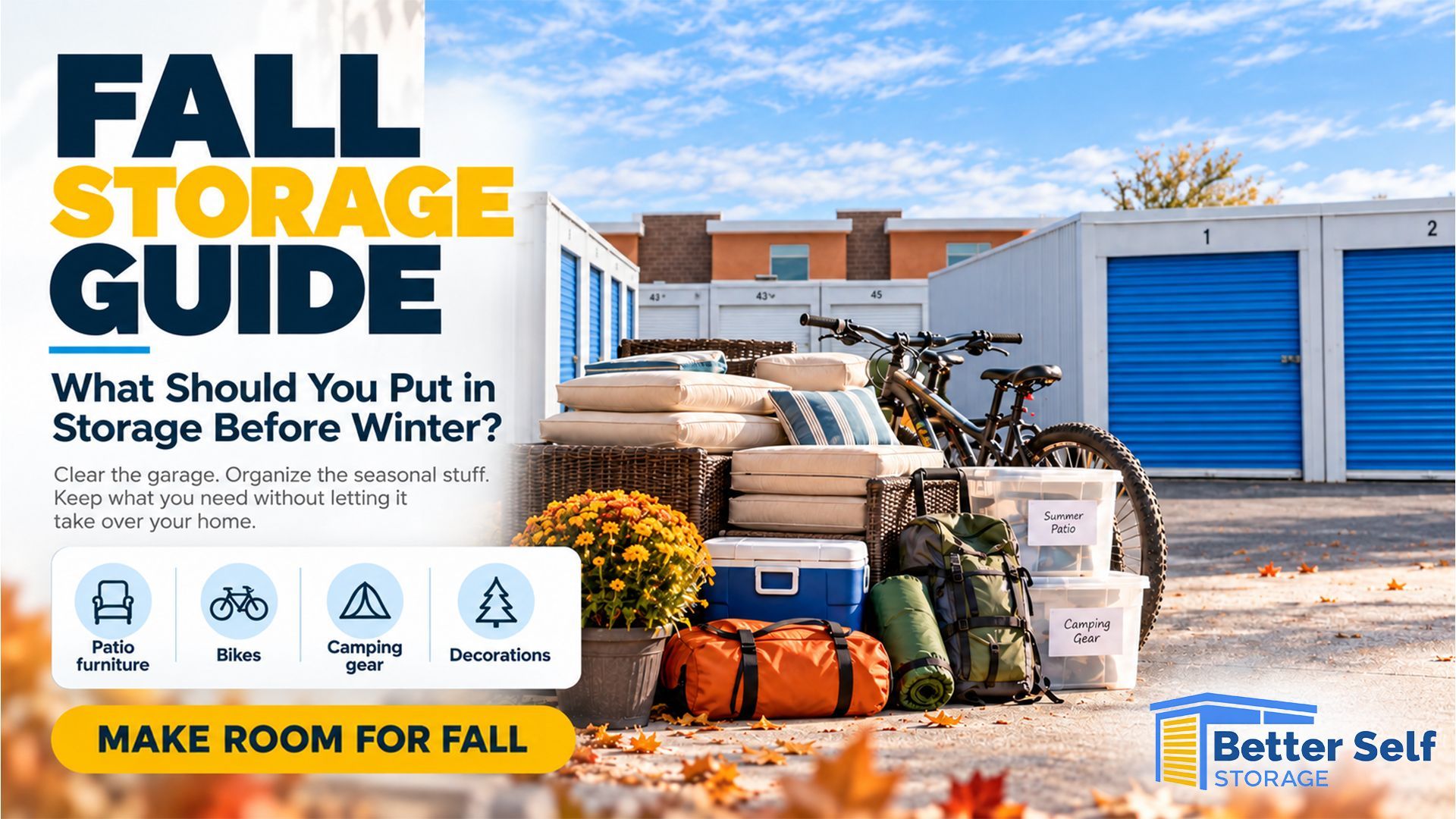
Fall is one of the best times of year to reclaim space at home. As summer winds down, garages start filling with patio furniture, bikes, camping equipment, yard tools, recreational gear, decorations, and everything else you probably will not need again for several months. Moving some of those items into a storage unit can create more usable space at home while keeping seasonal belongings organized until you need them again. The trick is knowing what makes sense to store, what needs a little preparation first, and how much storage space you actually need. What Should You Put in Storage in the Fall? Good candidates for fall storage are usually items you will not use regularly during the colder months. Depending on where you live and how you use your home, that may include: Patio furniture Outdoor cushions Bicycles Camping equipment Coolers Summer sporting equipment Lawn and garden tools Seasonal decorations Extra household furniture Moving boxes Dorm or apartment belongings Approved business inventory Recreational equipment The goal is not simply to move clutter from one place to another. A little planning can turn a storage unit into an organized extension of your home or business. Should You Store Patio Furniture for the Winter? If outdoor furniture will not be used for several months, fall is a good time to clean it and move it out of the way. Before storing patio furniture: Remove dirt, leaves, and debris. Allow furniture to dry completely. Remove cushions when possible. Disassemble large pieces if doing so saves space. Keep hardware together in a labeled bag. Avoid stacking heavy items on fragile furniture. Outdoor cushions should be completely dry before being packed away. This is also a good time to inspect furniture instead of discovering a broken chair or missing bolt next spring. What About Lawn and Garden Equipment? Lawn tools can take up a surprising amount of garage space. Rakes, shovels, wheelbarrows, lawn equipment, garden supplies, and seasonal tools can often be organized vertically or grouped together inside a storage unit. Fuel, flammable materials, hazardous materials, and other prohibited items should not be stored in a storage unit. If you are unsure about an item, check with the facility before moving it in. How Should You Store Bikes and Recreational Equipment? Clean dirt and mud from bicycles, camping gear, sports equipment, and other outdoor items before storing them. Whenever possible, keep related gear together. For example, camping chairs, tents, sleeping bags, lanterns, and coolers can occupy one section of your unit instead of being scattered throughout it. Labeling containers by activity instead of simply writing “garage stuff” on them will make spring much easier. Future you will appreciate the effort. Is Fall a Good Time to Organize Holiday Decorations? Absolutely. October is actually a useful time to reorganize decorations because the holiday season is just beginning. Instead of digging through six mystery boxes every time a holiday arrives, separate decorations by season: Halloween Thanksgiving Christmas Winter Spring Birthdays and special events Clear plastic bins or large labels can make individual categories easier to identify. Store decorations you will need soon toward the front of your storage unit. There is no reason to bury Christmas decorations behind patio furniture if you plan to retrieve them six weeks later. What Should Not Go Into a Storage Unit? Storage facilities have rules regarding prohibited items. Common examples may include: Gasoline Propane tanks Explosives Fireworks Flammable chemicals Perishable food Illegal items Hazardous materials Living animals or plants Facility rules can vary, so contact the property if you are unsure whether something is permitted. What Size Storage Unit Is Good for Seasonal Storage? There is no single correct answer because one household's “seasonal stuff” may be four totes while another household has a garage full of equipment. A smaller storage unit may work well for boxes, decorations, bicycles, and a limited amount of furniture. A larger unit may be useful when you are storing patio furniture, multiple bicycles, garage items, equipment, and household furniture together. Before choosing a size, make a list of your largest items first. Those are usually what determine how much space you need. Then use the Better Self Storage Storage Size Guide to compare common unit dimensions before checking current availability at your nearest location. 5x10 or 10x10 for Seasonal Storage? A 5x10 storage unit provides roughly 50 square feet of floor space. A 10x10 provides roughly 100 square feet. That does not automatically mean you need the larger option. If you mainly have decorations, boxes, bikes, or several smaller seasonal items, a 5x10 may be enough. If you are adding furniture, equipment, a large number of boxes, or belongings from several rooms, compare the two sizes before renting. Unit dimensions and availability vary by property. How Can You Keep a Storage Unit Organized Through the Seasons? Think about what you will need next. If you move summer belongings into storage in October but know you will retrieve Christmas decorations in November, do not put the Christmas bins in the back corner. Create simple zones such as: Front: Items needed soon Middle: Frequently rotated seasonal items Back: Long-term storage Leave an aisle when possible. A perfectly packed unit is not very convenient if accessing one box requires removing half the contents. Fall Storage Can Give Your Home Some Breathing Room You do not have to get rid of everything just because you want your garage, spare room, or basement back. Seasonal storage can help you create more usable space while keeping belongings available when you need them again. Better Self Storage offers multiple storage options across our locations, with unit sizes and features varying by property. Use our Storage Size Guide to estimate the space you need, then check current availability at the Better Self Storage location nearest you. Fall Storage FAQ What should I put in storage during the fall? Patio furniture, bicycles, camping gear, seasonal decorations, summer recreational equipment, extra furniture, and household overflow are common fall storage items. Can I store lawn equipment in a storage unit? Certain equipment may be allowed, but fuel and other prohibited or hazardous materials cannot be stored. Check facility rules before renting. What size unit do I need for seasonal belongings? It depends on the amount and size of your belongings. Smaller units may work for boxes and decorations, while larger units may be better for furniture, equipment, and multiple categories of household items. Should holiday decorations go near the front of my unit? Yes, especially if you will need them soon. Organizing your unit based on when items will be retrieved can save a lot of work later. Can Better Self Storage help me choose a unit size? Yes. Start with our Storage Size Guide, check the current inventory at your preferred location, and contact the team if you need help comparing options. MAKE ROOM FOR FALL Clear the garage. Organize the seasonal stuff. Keep what you need without letting it take over your home. Check current unit availability at Better Self Storage. Publishing Note: Link this article prominently to the master Storage Size Guide rather than creating a competing size-guide resource. Add links from applicable local fall/winter articles back to this page.
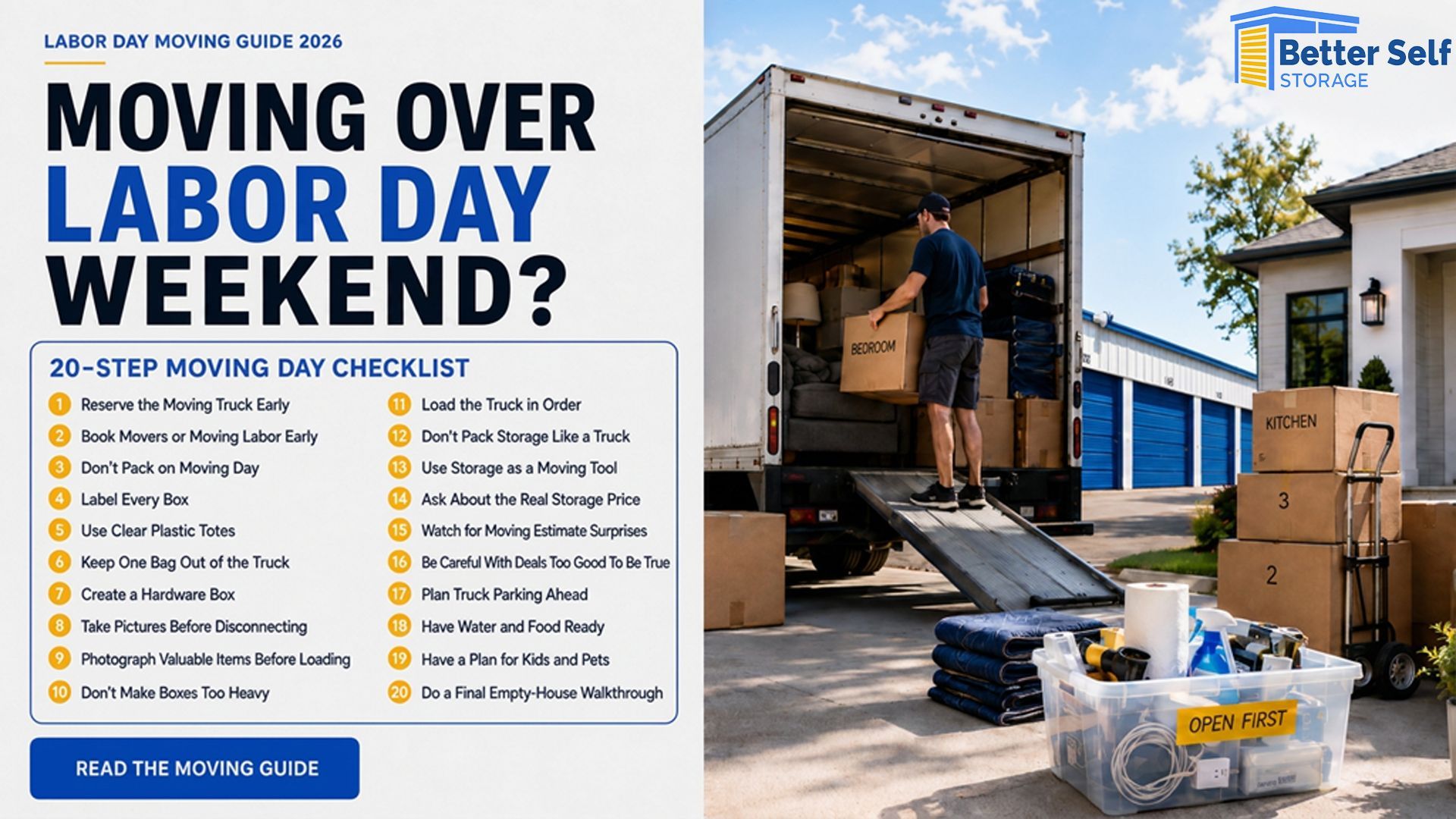
Moving truck and storage units during a Labor Day move.
By Bill DeWaal • September 3, 2026
Moving over Labor Day weekend? Follow these practical moving-day tips to pack smarter, stay organized, avoid common mistakes, and make your entire move easier.
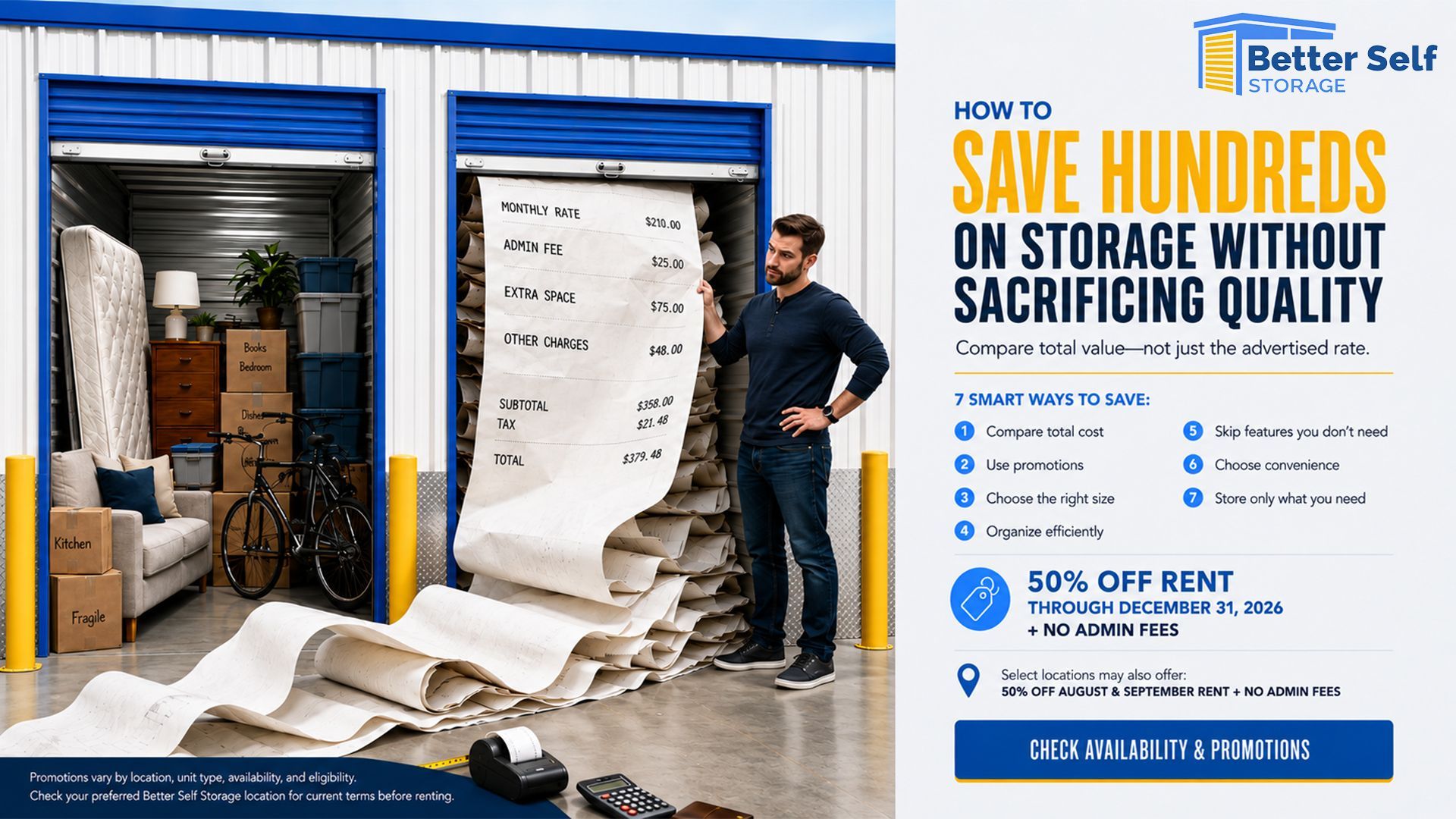
Better Self Storage units with customer comparing storage costs and ways to save.
By Bill DeWaal • August 29, 2026
Looking for affordable self storage? Learn how to save money on your storage unit without giving up convenience, cleanliness, or dependable service.
Family organizing school supplies and seasonal items for back-to-school storage
By Bill DeWaal • August 15, 2026
Get practical back-to-school storage tips for students and families. Organize your home, reduce clutter, and create more space for the school year.
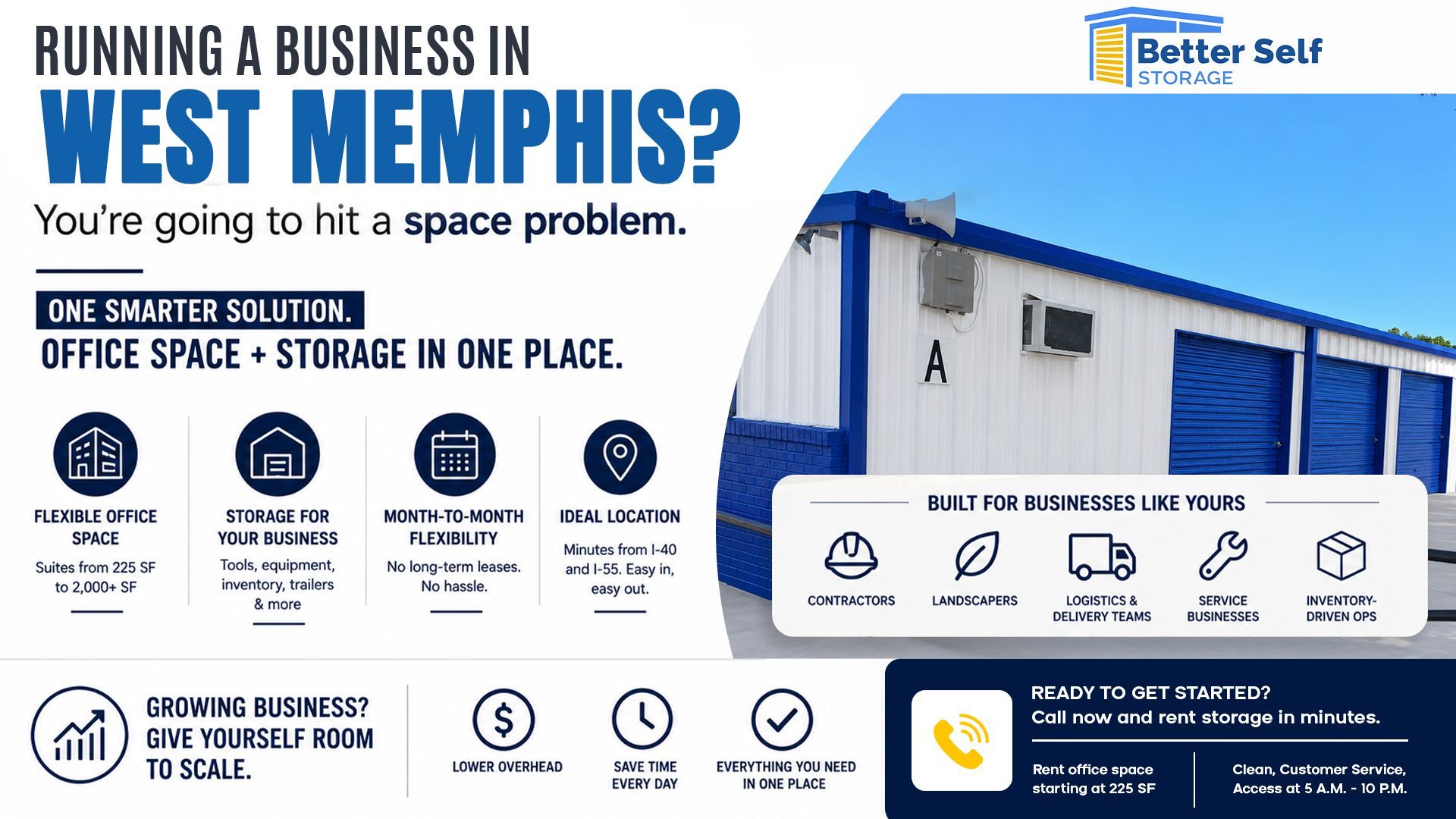
Better Self Storage ad for office space and business storage in West Memphis.
By Bill DeWaal • August 6, 2026
Need office space and business storage in West Memphis? Enjoy flexible leases, convenient access, and room to grow with Better Self Storage.
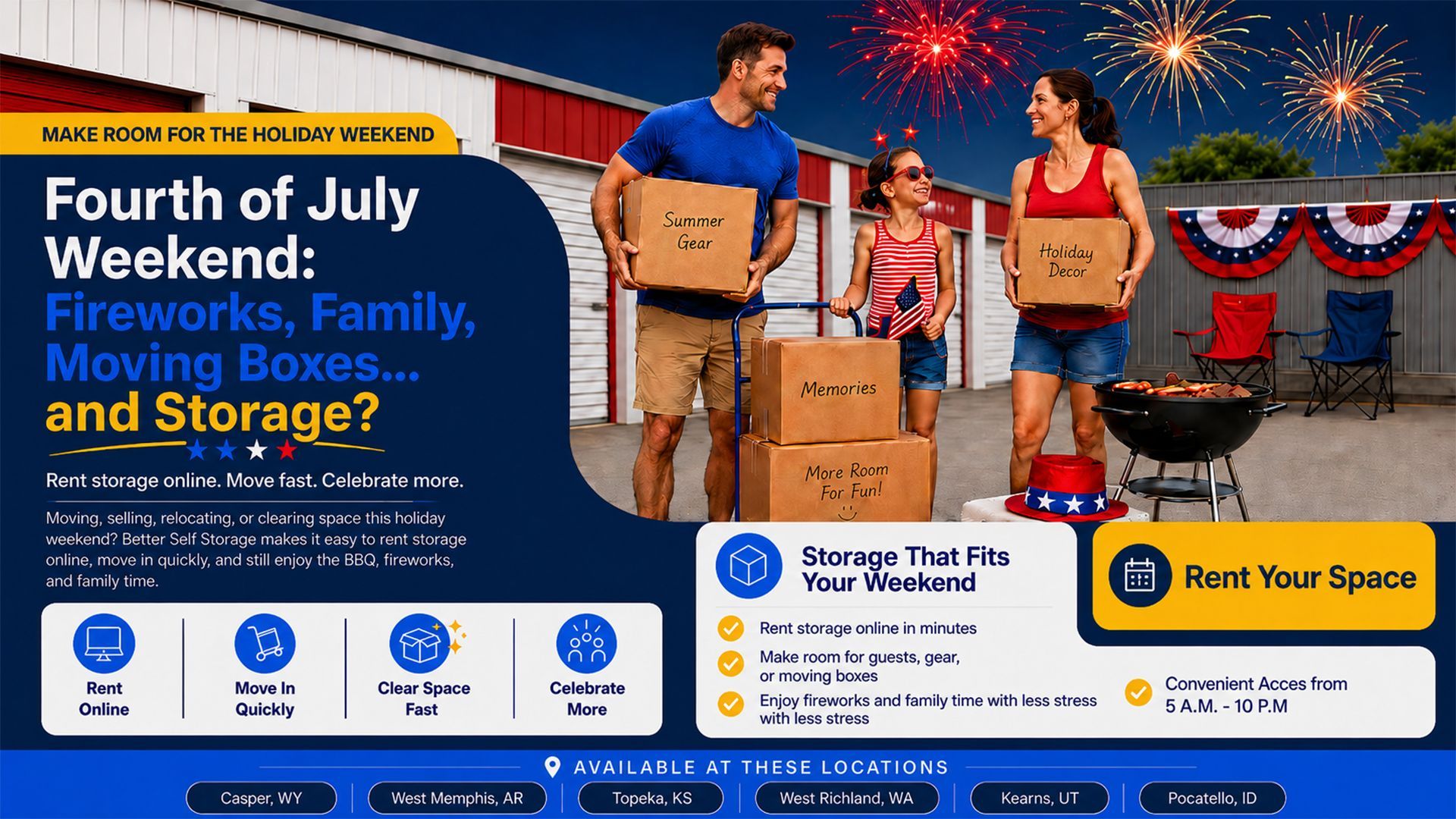
Fourth of July weekend moving storage ad with couple, boxes, fireworks, and rent-your-space button
By Bill DeWaal • July 3, 2026
Make your Fourth of July move easier with self storage solutions that help you clear space, organize belongings, and enjoy the holiday weekend.
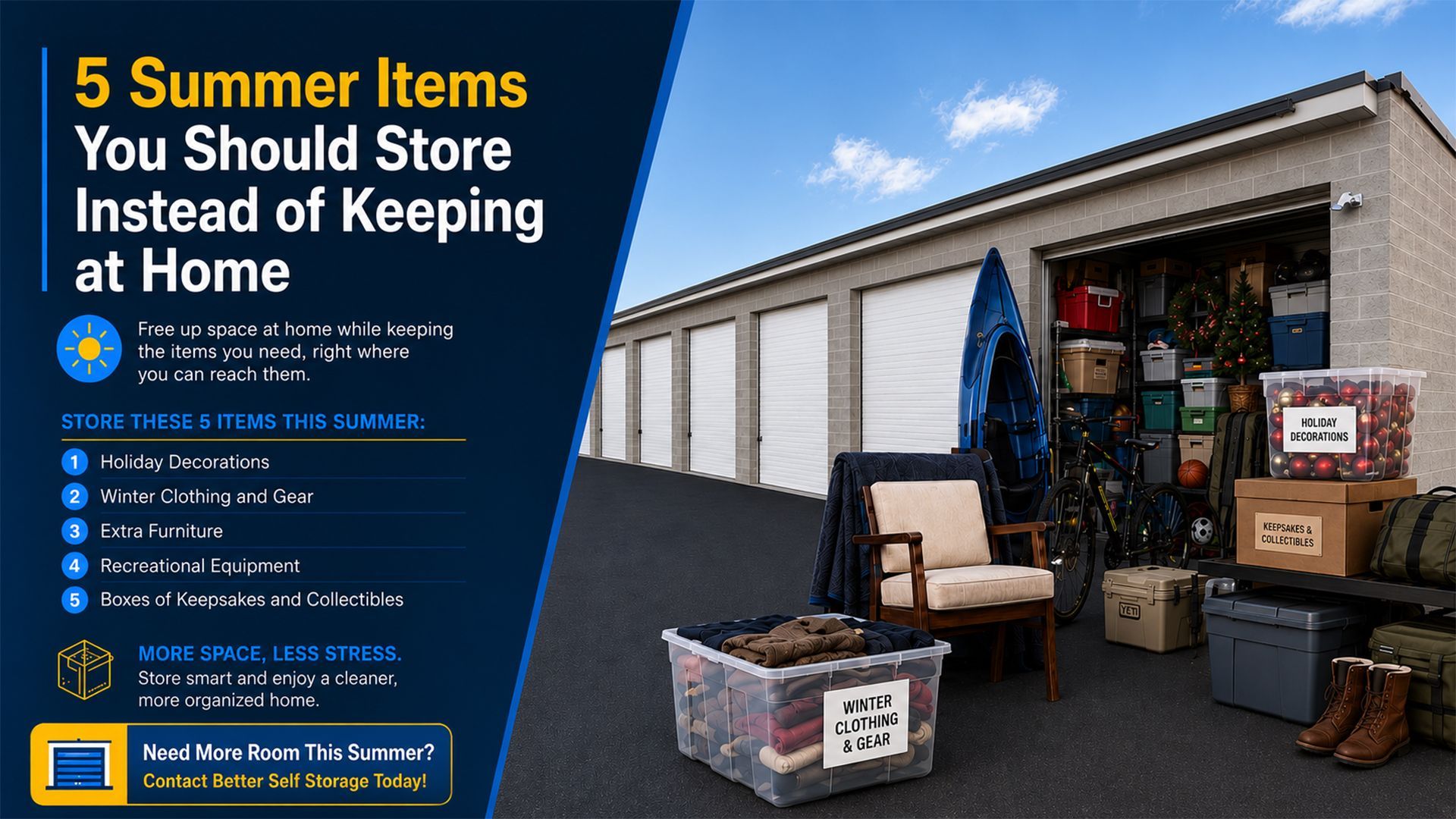
Summer storage solutions for seasonal items, furniture, and recreational equipment in self storage
By Bill DeWaal • June 29, 2026
Free up space this summer with self storage for seasonal items, furniture, decorations, and recreational gear while keeping your home organized.
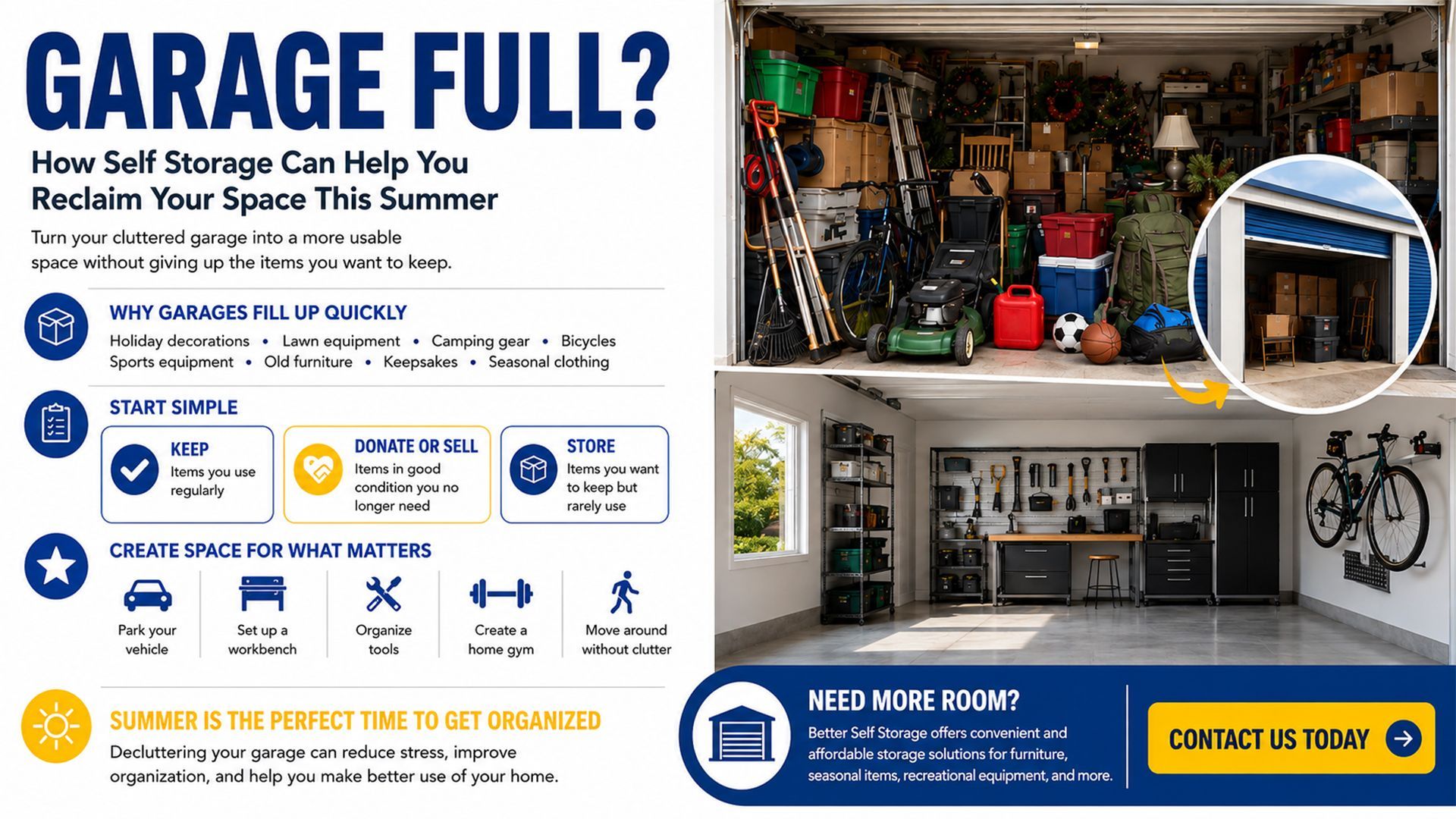
Organized garage transformation using self storage to create more space at home
By Bill DeWaal • June 23, 2026
Free up your garage with self storage. Store seasonal items, reduce clutter, and reclaim valuable space in your home this summer.
Family moving into a new home with boxes using self storage for extra space during summer move
By Bill DeWaal • June 8, 2026
Make your summer move easier with self storage. Discover how extra storage space helps organize, declutter, and simplify your moving process.
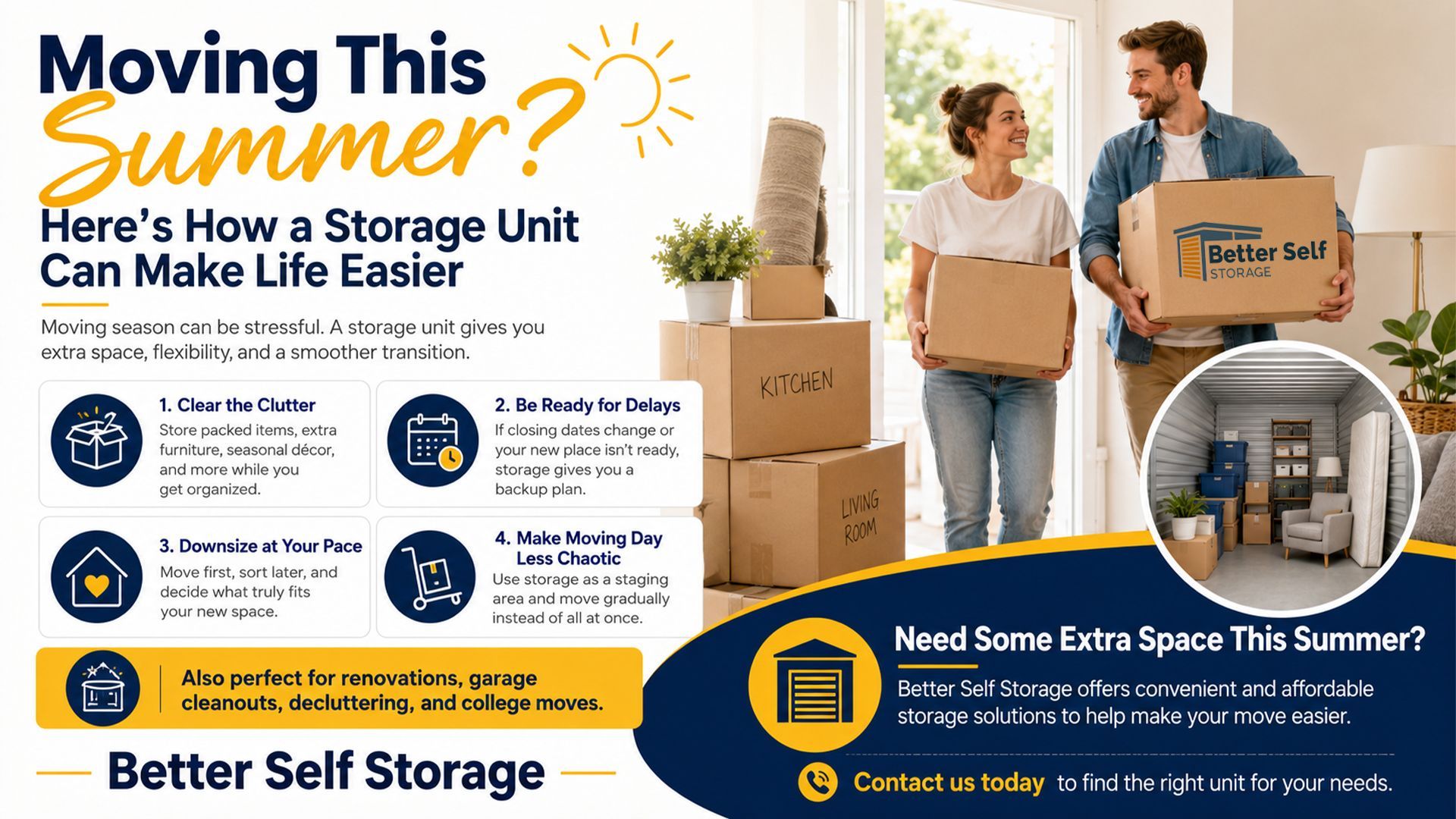
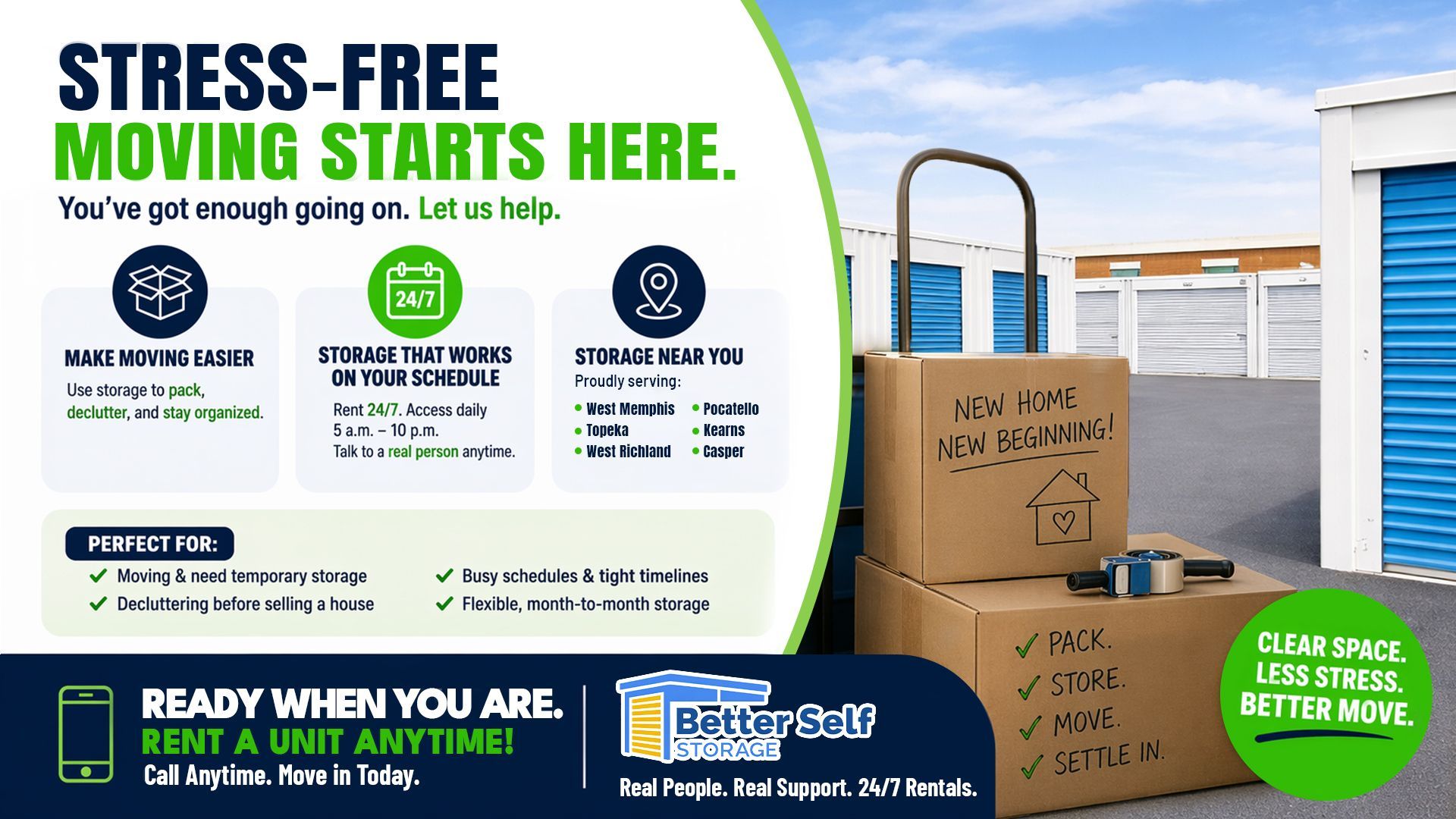
Stress-free moving with self storage units for packing, decluttering, and organizing belongings
By Bill DeWaal • May 15, 2026
Make moving easier with self storage solutions that help you pack, declutter, stay organized, and create extra space during your move.